Are there different grades of Wix oil filters?

Another possible point of confusion I had to clear up before recommending this filter was its only listed application, carrier refrigeration units. This could have meant it’s intended to filter the refrigeration compressor’s oil on the refrigeration units of large high-rise office buildings, which would render it useless for our vehicles. But baldwin assured me in an email that was not the case, but rather it’s the filter for the engines that drive these refrigeration compressors, especially in semi-trucks. And they assured me it’s used in other truck engines too. It just happens to initially be designed for the engines that drive the carrier refrigeration units.

This is the only baldwin filter with no average efficiency rating because despite its very fine particle filtration, it’s off the scale with its flow-ability rating at normal operating pressures.
.
- - - - - - - - - - - - - - - -
oem notes:
.
anytime you see the word oem in the attached tables, it means baldwin is the original equipment manufacturer for that filter . wix won’t tell you that kind of info, but I suspect wix at one time was the oem for IH with its 51452 filter . no proof, just a hunch .
.
- - - - - - - - - - - - - - - -
synthetic filter notes:
.
Here is a quote about synthetic media, but don’t recall where I got it from: “an engineered synthetic media is course on the outside and progressively finer toward the inside effectively increasing its filter area by "filtering in depth". All filter media to some extent filters in depth but the synthetic media can be so much more uniform in thickness and spacing that not only are comparisons between cellulose and synthetic area based on visual inspection or area meaningless, but visual comparisons between different synthetic media also can not be done”.
I would change that slightly to read “meaningful visual comparisons can not be done without a microscope”. That’s why engineering data like baldwin provides and wix won’t is so important when choosing to upgrade your engine’s filtration system/filter.
.
- - - - - - - - - - - - - - - -
by-pass valve notes:
.
our engines definitely need a filter with a by-pass valve (which should be 8 psi) . this allows oil to flow through to the engine when the filter becomes too plugged-up with debris to allow the oil to flow through its filtering medium . and the by-pass valve allows the oil to flow through to the engine when the oil is too thick or cold to flow through the filtering media, which frequently happens when the engine is first started on a cold morning with a paper filter . unfortunately every time the valve opens to allow the oil to flow through, that oil is unfiltered, dirty oil .

there are two schools of thought regarding the best location for the by-pass valve . one is that the best place is at the top of the filter so the unfiltered oil does not wash across the dirty side of the filter first, collecting more contaminants before entering the engine .

the other, held by baldwin, is that actual testing has determined it really doesn’t matter where the valve is located . the contaminants are lodged in the filter medium, and either way the valve is below the threads, and the swirling, pulsating oil will still pull any loose contaminant not embedded in the filter’s medium and pump it through your engine in addition to the other unfiltered oil when the bypass valve is open . and if your filter is so loaded with contaminants that it’s not all imbedded in the filter medium, but rather sitting loose at the bottom of the filter can, then you should have changed your filter long ago as it’s now in a fully loaded state where the filter is already mostly operating in a state where the by-pass valve is always open .
just another reason why it’s important to replace your filter regularly .
.
- - - - - - - - - - - - - - - -
.
I was going to describe the specifications about each filter and why I ranked it where I did, like I did with the first filter, but I can see now, if I did that, this post would be 20 pages long. So open a second window for the attachments as I refer to them for filter specification details and I’ll keep my remarks to a minimum, only stating my reasons for ranking it where I did. For flow rates I did not list all the test points in the attached tables, only the top and bottom published flow specification for each filter.
.
- - - - - -
bt217
bt237
.
these are exactly the same filters in every way, per baldwin, except they have different part numbers for marketing/oem purposes .

I ranked this set of filters second because of their good flow rate but especially because of their exceptional ability to hold a lot of “dirt”, almost 50 grams with 515 sq . in . of filter paper . and the only filters with substantially finer filtration than these two filters (other than the b7311-mpg) are the two b2 series of filters, but their flow and filter capacity can’t compete, so that leaves this set of filters as my second choice .
.
- - - - - -
bt251
.
I ranked this third because it doesn’t have quite as much contaminant holding ability as the previous set of filters. However it does flow better than the above filters because it doesn’t have a standpipe or as much filtering paper stuffed into the can. And if you consider the better flow (less pressure drop) to be more important than the extra contaminant holding ability, I see where you could easily rank it above the bt217/bt237 set of filters. But these filters all flow so well, I don’t know if the pressure difference would be noticeable until they start to reach the limits of their dirt holding capacity. Perhaps someone some day can try both and let us know if there is any noticeable pressure difference between the bt251 and the other filters.
.
- - - - - -
b2-hpg
.
this comes in at the top of the 5 inch filters because it has good flow, great contaminant filtering ability and the best dirt holding capacity of any 5 inch filter .
.
- - - - - -
b2
.
With a little better flow (less pressure drop) and about the same or slightly worse filtering ability than the b2-hpg, but because of much less contaminant holding ability, I rank this below the b2-hpg. But here again, if you consider the flow/pressure drop more important, I can see ranking it above the b2-hpg. But at this point I don’t know if the very slight difference in flow characteristics would equate into a noticeably different engine oil pressure reading. I suspect it would not until the filter begins to approach the limit of contaminant holding ability. That’s why when things are nearly equal I will go with the filter that can hold the most contaminants.
.
- - - - - -
bt216
.
I debated if I should include this filter in the list of the best of the best at the top of the post . it appears to have almost double the flow of the other 5 inch filters above, and the same contaminant holding ability as the best 5 inch filter, the b2-hpg, both very important to the ranking of the filter . but it achieves this by doubling the size of the holes in the filtering medium compared to the other 5 inch filters . and based on my premise that the most important requirement of a filter is to filter, is the reason why I did not put this filter in the list of the best of the best . but study the specifications in the attached tables as you May find you would prefer it to the other filters if you have to run a 5 inch filter . it has the same filtering rating as some of the 7 inch filters .
.
- - - - - - - - - - - - - - - -
wix oil filters table attachment:
.
- - - - - -
51459
.
The 51459 filter seems to be the verifiably best filter of any of the wix filters. It has a higher capacity (therefore should hold more “dirt” and flow better) than any of the wix 5 inch filters with similar or better filtering abilities compared to all the other wix filters, except for the unknown wix filter 57515, which has finer filtering. And as for applications, it has a long list of heavy duty and off-road truck applications with many similar to the same heavy-duty off-road applications as the wix recommended 51452 filter. And it has what I feel is a better by-pass valve psi rating for our low oil pressure engines – a rating of 7 to 9 psi as compared to most of the other filters’ 8 to 11 psi ratings. And it’s the only wix filter where their beta ratios and nominal micron rating specifications seems to be almost congruent. But because of its lack of technical data, I cannot rank it higher among the 7 inch filters. Based on applications, and that’s about all I have to go on with wix, it should be an excellent filter for our engines. It’s the second filter I ever put on my IH 304 v8 truck, and presently have on there now as of the date of this post. Once I install an accurate oil pressure gauge to supplement the dash gauge, I will be able to provide some actual numbers.
.
- - - - - -
51773
.
the 51773 filter wix says is the high capacity version of the popular 51515 . but according to their published data, it doesn’t filter anywhere near as well as the 51459, or any baldwin 7 inch filter, and there is no beta ratio data published for the 51773 filter . consequently it does not make the recommended grade . it’s mostly used on a lot of Ford big cu in engines, and a few diesels . and I’m sure it’s a good filter that you can use ok, but why when there are other better filters available .


<<<<< part 4 continued below >>>>>
 
- - - - - -
51452
51806
51515
.
The next set of filters, the 51452, 51806 and 51515 all seem to be identical filters, except the 51806 has a slightly lower cut-in psi value for its bypass valve, which I think is good for our low oil pressure engines. Therefore application data was the primary determining factor for ranking these filters. Although the 51806 has many off-road truck applications, it should be noted that the 51452 is the filter wix recommends for our IH gas engines. Be sure to read my previous post detailing the application differences between the 51515 and the 51452 filters. If you want the wix recommended truck filter, use the 51452, if you want the same truck filter but with a slightly lower by-pass valve psi cut in point, use the 51806, and if you want to use the same filter but made to passenger car specs, use the 51515. All good filters.
.
- - - - - -
57515
.
the wix non-paper glass media filter, 57515, is supposed to be the equivalent of the 51515 but claims to filter twice as well as any of the paper media filters . this filter could potentially be at the top of the list of wix filters and above many baldwin filters, if actual engineering test data was available for it . however, this data is not available so I cannot recommend it, and it has no applications listed . it’s here primarily because it has the potential, based on its published nominal micron rating and media type . however, if you plot out the beta ratios on a graph, at some point it would seem a filter’s stated nominal micron ratings would be crossed, but with wix, unlike baldwin, it does not happen with all but one of their filter’s beta ratio filter specifications . therefore it would seem either their beta ratios or their stated nominal micron ratings are bogus in most cases, just like their flow rating specifications, as explained earlier . therefore you can see why I cannot recommend this potentially great filter . the filter’s here because I’m sure it could be a great filter for our use, but how good, I cannot say, and wix will not say . with wix, in the quest to find the best filter, I can only recommend filters which include listed applications, and not based just on their partially disclosed, and often-times questionable engineering data alone .
.
- - - - - -
51515xp
.
The 51515xp is touted by their marketing department as the extended performance, or for their diesel applications, extended duty, premium filters because of its extended time period before it needs to be replaced. Of course, when asked directly how it compares with another filter, such as the 51515 or the 57515, they reply with “that information cannot be released” and to just “look at the web site”, which doesn’t tell you any needed technical details. However, through unofficial channels it was learned that the xp line of filters really is only a marketing ploy and that these filters last longer because they don’t filter as well. And that would make sense based on the nominal micron rating compared to their other synthetic filter, the 57515. The 51515xp has a micron rating only equal to their paper filters. It gives you less value, but technically it is extended performance because less particulate will be caught by the filter, so it will last longer. So if you want a good synthetic filter but with only paper filter performance, here it is.
.
- - - - - - - - - - - - - - - - - - - -
.
the filters listed in the tables are only intended for the gasoline IH 304, 345, and 392 engines but there are many other engines, both IH and non-IH that these filters also apply to . in my quest for the best, only the ones in black are my pick as best of the best . but the other part numbers in brown are listed because you May consider some specification they have as more important for your application than I do for my application . hopefully these tables take the mystery out of selecting the best filter for your application . it’s not rocket science, and you really can’t go wrong with any of the filters in the tables, even if I did not select it to be in my best of the best group . I’m sure they are all better than fram and many other similar manufacturers’ filters that are “made” for our engines .

be aware this list of filter recommendations only applies as of right now . any day wix could come clean with their engineering data and publish true specifications . I have seen in other forums where people have documented conflicting specifications released by wix for the same filter . and I found one instance where they had a different spec for the same filter in two different places . and there could be changes made to a particular filter by any manufacturer at any time or a new line of superior filters by any manufacturer could be added at any time . technologies are constantly changing and there could come a day soon when even these filters in this post will become “old technology” or obsolete and replaced by something different and better . nano technologies are still in its infancy, and that opens up a whole new universe of possibilities .
.
- - - - - - - - - - - - - - - - - - - -
.
Warning: if you use a wix or baldwin oil filter, do not trust their interchange tables. Doing so can do serious damage to your engine. As of the date of this post, some of their web site interchange recommendations are still wrong! If you use a wix or baldwin oil filter, use only the filters listed in the attached tables (except for loadstar filter applications). Do not use any of their other cross-recommended oil filters on these old v8 gas engines.
.
- - - - - - - - - - - - - - - - - - - -
.
there are a couple other filters worth mentioning but not listed above, and not listed in the attached tables because I have not done the research needed to say more than just passing comments on them . I mention them only because they might apply to someone else’s situation, but they definitely don’t apply to mine .
.
- - - - - - - - - -
8431-l
.
First, there is a spin-on stainless steel filter made by a company called pure power - http://gopurepower.com. It is a lifetime spin-on filter that can be disassembled and cleaned as it uses a very fine stainless steel screen mesh filtration media. They also manufacture faa approved aviation filters, and on the surface have some very impressive flow numbers that paper filters cannot achieve. Here are a few quotes from their web site: “multiple patent pending designs… provides for “one-pass” absolute filtering… filtration: sae j1858 tested: 90% more efficient than "throw away" filters… cooler operating temperatures, increased horsepower, extended oil drain intervals, greater oil flow, improved fuel mileage. 100% absolute filtration”. Of course many of these same claims can be made by any good-flowing filter – cooler operating temperatures, increased horsepower, extended oil drain intervals, greater oil flow etc. Although this could be a good race car filter, no actual micron filtration numbers are provided by them. Also could not get a straight answer regarding bypass valve psi rating. They are also the manufacturers of the k & n stainless steel screen mesh oil filters.
.
- - - - - - - - - -
wix 57514
.
if you have a show only truck, wix makes a chrome spin-on oil filter, part number 57514 . however, it is for show only as it is intended for small engines of 200 cu . in or less . same claimed rated filtration, flow, etc as our stock 51515 filters, but I don’t know about its ability to properly seal on our engines as it uses a different gasket . best use - after you put your truck on the showroom floor, then put the chrome filter on it .
.
- - - - - - - - - -
wix 51515r
.
And finally there are the race car filters, such as the wix 51515r. If you’re looking for that last bit of horsepower, and great flow to keep your high-revving engine well lubricated, this is a filter to consider. Although it has very poor filtration ability, with a 61 nominal micron rating, its rated flow is 28 gallons per minute. By comparison most filters listed above are flow rated at 7 to 9 gallons per minute but our stock engines only pump about 3 gallons per minute.
.
- - - - - - - - - - - - - - - - - - - -
.
and for the sake of completeness, although not heavily researched, my gasoline filter of choice would be either the baldwin bf7633 (2 micron nominal, 5 absolute at 98.11% average efficiency with 651.5 sq in of filtering media capable of holding 25.4 grams of contaminants, and tested with 0 to 50 psi pulses 100,000 times) or the wix 33528 (2 micron nominal, ? absolute, ? efficiency) . this high-capacity spin-on gasoline filter should go between the gas tank and fuel pump . both use wix base part number 24770 . as contrasted to the little plastic or metal in-line gas filters that have between 12 and 140 micron nominal filtering capability and ? absolute filtering capability . in my truck I’ve attached the 24770 / 33528 filter to the firewall below and to the right of the heater box . (next time it will be a baldwin) ;-)
and if your fuel pump has the glass bowl filter attached, that is a 19 nominal micron filter, wix 33943 or baldwin pf859 .

and as for coolant filters, I’ll do an update to this thread or create a new thread in the engine cooling section later as that topic can be much more involved . but you should also consider a quality cooling system filter for maximum protection .
.
- - - - - - - - - - - - - - - - - - - -
.
So is all this over-kill? Perhaps. But then again so is fuel injection on these engines, unless you want the best of the best from these power plants. Or you want the best engine protection insurance money can buy. It’s all about educated choices and I hope I provided you with a few with something as simple as your engine’s oil filtration choices.


<<<<< part 5 continued below >>>>>
.
.
 
Last edited:
And know these filters May plug up sooner than the filter you are presently using if it filters finer and filters more contaminants out of your oil than your present oil filter. So initially when converting to some of these filters, it’s possible you May want to change the filter more than once between oil changes. The best way to monitor your filter’s status is to install an accurate oil pressure gauge. And when you see a 4 to 5 psi drop compared to the time the filter is first installed, you will know it is time to change the filter as soon the by-pass valve will be doing its thing, and because of the by-pass valve, you will not notice a drop in pressure much beyond that. And remember its always best to fill an oil filter with oil prior to installing your new filter so the time the engine is running without full oil pressure is kept to a minimum.

I would like to conclude with a quote from jeremy wright of noria corp, a well-known and factual reference on anything related to lubrication, “it May cost a few extra dollars in the beginning, but there have been multiple case studies on the effect of the cleanliness of the oil affecting component life to the tune of three to four times the life extension of the engine.
Ask yourself the next time you are standing in front of a store shelf full of engine oil filters … “is it worth a few extra dollars to me now to save an expensive rebuild down the road?” ”
.
- - - - - - - - - - - - - - - - - - - -
.
Disclaimer:
I am neither a professional engineer nor a member of the society of automotive engineers, or a professional mechanic. Therefore my opinions expressed are not professionally held and should not hold any more weight than any other person’s uneducated opinion.
This post is only for the education and enjoyment of IH enthusiasts.
:)


and so why did I do all this? For a couple reasons. First , I’m new to the IH world of trucks. And I did not seem to find any definitive answers as to which oil filter is best. It all seemed to be circumstantial or anecdotal evidence such as “I’ve always used this one” and someone else stating “but I’ve found that one to be better”. But never this one or that one is best because it filters the most efficiently, capturing the smallest contaminants, or most contaminants, or flows the best with the least pressure drop, etc. So after I found my answers, I wanted to put something together for the education and use of all IH enthusiasts because I wanted to give back to the community that has helped me so much with my project truck. And won't you have an answer the next time someone innocently asks, "what filter do you think I should use?"

thank you all for the help, support, advice and motivation throughout this forum, thereby keeping my project on track.

Steve

this concludes part 5 of this 5-part post.

<<<<< end of post >>>>>
.
attachment.php

.
attachment.php

.
 

Attachments

  • Baldwin_oil_filters_table.jpg
    Baldwin_oil_filters_table.jpg
    71.7 KB · Views: 32,368
  • Wix_oil_filters_table.jpg
    Wix_oil_filters_table.jpg
    78 KB · Views: 26,269
Last edited:
With your permission, I'm going to share this with my club! Mostly Jeep 4.0l, but I see a lot here that May help them, too. Our group is pretty hard equipment, so this is a good thread for some of them to study! Thanks for the effort, and I hope more of the gang reads it:thumbsup:
 
with your permission, I'm going to share this with my club! Mostly Jeep 4.0l, but I see a lot here that May help them, too. Our group is pretty hard equipment, so this is a good thread for some of them to study! Thanks for the effort, and I hope more of the gang reads it:thumbsup:

Hi, you're all welcome.
And yes, that's fine with me. The info is for everyone's use.
Steve
 
Last edited:
Hi,

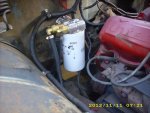
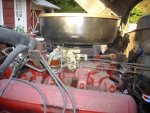
just thought I'd post a couple pictures of the fuel filter I added to my truck. I spoke a little about them on the previous page - how it has between 2 micron nominal and 5 micron absolute filtering, and holds 25 grams of dirt, rust, etc as opposed to the little inline filter people usually use that has a big 140 micron nominal filter rating and unknown absolute filter rating.

I must admit I have not had any more stuck-open carb float needles since installing this filter, and I have never cleaned out my gas tank, and by the looks of it, neither has the previous owner. I run my truck at least once every other week.

The last picture is of a little fuel / water separator filter I added to the carb's inlet. It let's me see if there is any moisture in the fuel, and the general condition / color of the gas.

Steve

attachment.php

.
.
attachment.php

.
.
attachment.php

.
 

Attachments

  • fuel_filter1.jpg
    fuel_filter1.jpg
    67 KB · Views: 2,780
  • fuel_filter2.jpg
    fuel_filter2.jpg
    58.7 KB · Views: 2,720
  • fuel_filter3.jpg
    fuel_filter3.jpg
    71.2 KB · Views: 2,869
Last edited:
Wow, quite a bit of research there steve. You've certainly done a lot of homework. I never would have thought of filter ruggedness until you brought the difference in street vs offroad, gas vs diesel.

The main thing that filter specifications fail to tell, though some do, besides efficiency in % and arrestance in grams of dirt holding power is how long they last. Some advertising says 100% absolute, absolute at what micron? Boulders or pebbles? Some boxes I've read claim 99%, then in fine print it's at 25 or 30 micron, then 90 or 92% at 10 or 15 micron. We never get the oil really clean, but a filter can keep the dirt levels low enough that the dilution of it per oil charge won't cause high rates of wear. Or, to put it another way, a good filter cleans the oil just enough to put it ahead of the rate dirt is entering. The particle size most responsible for engine bearing wear is in the 10-20 micron range.

The media itself is not linear spaces of discrete dimension, but actually a mix or large and small pores of all shapes. Various types of forces are at work to restrict non fluid particles, the main thing that is depended on is impingement. Just the oil changing direction through the pores causes the dirt to get flung out of the stream and stuck on a fiber. Imagine pouring sand on a big random, unstacked pile of logs. A lot of sand gets trapped just piling up on the tops of the logs. Same thing happens in a filter. The larger particles get trapped in the pores too small to let them pass, like dropping boulders on the same log pile. Some stuff just gets through, now it's like dropping golf balls on that same log pile, some get stuck in the crevices and some just bounce through. How long it all lasts can depend on oil quality, driving and vehicle use. Stop and go driving really piles up the contaminates. Some testing done in 1965 showed that filter life lasted about 2,500 miles give or take a few, then intervals from that; based not on pressure drop or relief valves lifting but at the engine wear rate that occurred. What was found was that the smaller pores that provided the finest filtration filled up first, leaving only the larger pores to just strain big dirt.

Good homgenous media, and lots of it, is not cheap. Neither is a good construction and valves to hold it. I doubt much has changed in filtering for the consumer since 65, and seeing that I feel safe with my oil lasting maybe 4 or 5k miles as it is not stop 'n go; 2 filter changes is a good way to keep it clean that long. The single biggest factor that owners of very high mileage engines that still work good and don't smoke has been consistent regular oil/filter changes and maintenance. In answer to the 1st question, yes there are "grades" or economy vs premium. More media, higher efficiency, ruggedness will have a slightly higher cost than "standard" or economy. Thanks for the part numbers steve!

my IH 304 holds 9 quarts of oil.
Do you have an extra deep or high capacity pan?

The carquest box that the filter came had fine print which said affina filtration.
Affinia filtration is a part of affinia group, a holding company that also includes wix and brands that were under Dana corp before it's spiral downward. Tooling and product haven't changed, they make the house brands for napa, carquest, acdelco. Clarcor, baldwin, purolator, and donaldson are still their own and going strong.

The next biggest single source of engine dirt is the induction; how about those air filters?
 
Last edited:
wow, quite a bit of research there steve. You've certainly done a lot of homework. I never would have thought of filter ruggedness until you brought the difference in street vs offroad, gas vs diesel.

The main thing that filter specifications fail to tell, though some do, besides efficiency in % and arrestance in grams of dirt holding power is how long they last.

I think its implied that they will last until it reaches its maximum dirt holding capacity, however long that is. And that's the unknown. The best we can do is to monitor the oil pressure drop with a good mechanical oil pressure gauge and once the oil pressure is reading about 5 psi less than when the filter was new, then its time to change the filter.

Some advertising says 100% absolute, absolute at what micron? Boulders or pebbles?

So true....

Some boxes I've read claim 99%, then in fine print it's at 25 or 30 micron, then 90 or 92% at 10 or 15 micron.

So true, and very confusing for filter comparisons. But the beta ratio specs address this inconsistency. I had another couple pages written up on just beta ratios, what they realistically mean, how they're calculated, how to graph and extend their graph to cover the entire filtering spectrum of a particular filter, etc. But I thought the post was already too long to hold most people's attention, so I just completely deleted that long part of the post. Plus it really didn't matter as most of the beta ratio information supplied by wix is bogus anyway, it just would not graph out properly. Only their 51459 filter came anywhere close. And from a subjective viewpoint, it just doesn't make sense that nearly all the wix filters have the same beta ratios, from their small 3 inch filter on up.

I don't have my notes handy, but generally speaking when a spec lists absolute micron size, that means 98% of all contaminants that size or larger will be caught by the filter (until it reaches its maximum holding capacity). That's why I like to look for the largest filter with the smallest absolute micron spec possible.

We never get the oil really clean, but a filter can keep the dirt levels low enough that the dilution of it per oil charge won't cause high rates of wear. Or, to put it another way, a good filter cleans the oil just enough to put it ahead of the rate dirt is entering. The particle size most responsible for engine bearing wear is in the 10-20 micron range.

Yeah, I agree with all that. And combustion does put a never-ending supply of new contaminants into the oil.

The media itself is not linear spaces of discrete dimension, but actually a mix or large and small pores of all shapes. Various types of forces are at work to restrict non fluid particles, the main thing that is depended on is impingement. Just the oil changing direction through the pores causes the dirt to get flung out of the stream and stuck on a fiber. Imagine pouring sand on a big random, unstacked pile of logs. A lot of sand gets trapped just piling up on the tops of the logs. Same thing happens in a filter. The larger particles get trapped in the pores too small to let them pass, like dropping boulders on the same log pile. Some stuff just gets through, now it's like dropping golf balls on that same log pile, some get stuck in the crevices and some just bounce through. How long it all lasts can depend on oil quality, driving and vehicle use. Stop and go driving really piles up the contaminates.

I agree. The wix extended performance filter 51515xp is a good example of that - it lasts longer because the holes are on purposely larger.

Some testing done in 1965 showed that filter life lasted about 2,500 miles give or take a few, then intervals from that; based not on pressure drop or relief valves lifting but at the engine wear rate that occurred. What was found was that the smaller pores that provided the finest filtration filled up first, leaving only the larger pores to just strain big dirt.

That's why I try to go with the largest filter that has the smallest absolute micron rating specification.

Good homgenous media, and lots of it, is not cheap. Neither is a good construction and valves to hold it. I doubt much has changed in filtering for the consumer since 65,

I don't agree with that. Recently, with the use of new nano-technology, the all synthetic filter is very much improved over the previous paper/cellulose filter. Both baldwin and wix each had two synthetic filters applicable to our engines with the baldwin b7311-mpg coming in far superior to any other filter, and the two wix synthetic filters coming in last only because they had no specs or applications listed for them, so their performance is really unknown.

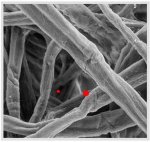
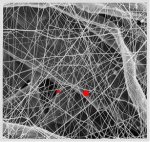
Below is a picture of traditional cellulose filter media and the newer synthetic nano-technology filter media. The red dots represent in size a 2 micron and 5 micron particle. This was taken with a scanning electron microscope magnified 1000 times. Unfortunately these newer synthetic filters cost about double what a traditional filter costs.

First picture is of a cellulose/paper oil filter media, compared to a synthetic oil filter media.

attachment.php

.
attachment.php

.

and seeing that I feel safe with my oil lasting maybe 4 or 5k miles as it is not stop 'n go; 2 filter changes is a good way to keep it clean that long . the single biggest factor that owners of very high mileage engines that still work good and don't smoke has been consistent regular oil/filter changes and maintenance .

yes, exactly, I totally agree with all you just said !

in answer to the 1st question, yes there are "grades" or economy vs premium . more media, higher efficiency, ruggedness will have a slightly higher cost than "standard" or economy . thanks for the part numbers steve !

do you have an extra deep or high capacity pan ?

yes, and I wish there was some way to track down the original use or origin of this engine . is there some serial number somewhere on this engine unique only to this engine assembly ? the po told me it came from some old low mileage military vehicle, but who really knows .

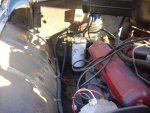
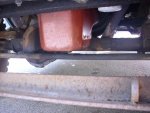
here's a picture of my very deep oil pan, with less than two inches clearance to my tie rod
.
attachment.php

.

affinia filtration is a part of affinia group, a holding company that also includes wix and brands that were under Dana corp before it's spiral downward . tooling and product haven't changed, they make the house brands for napa, carquest, acdelco . clarcor, baldwin, purolator, and donaldson are still their own and going strong .

the next biggest single source of engine dirt is the induction; how about those air filters?

yes, I started researching air filters too . although there are thousands of different ones, for the most part we really are limited to what will fit under the hood and in our air filter housing . if you have a choice, get the air filter made for a truck application and not a car application, especially not a high performance car or race car . the truck filter, although the appearance will be the same as for a car, will do a much better job of filtering finer particles . also note the cfm rating of an air filter is different from the cfm rating of a carburetor - completely different scale and unrelated rating specs so don't even try to match them together when choosing an air filter assembly .

thanks .

steve
.
 

Attachments

  • cellulose_media.jpg
    cellulose_media.jpg
    19.9 KB · Views: 2,654
  • synthetic_nano_media.jpg
    synthetic_nano_media.jpg
    34.3 KB · Views: 2,671
  • oil_pan.jpg
    oil_pan.jpg
    67.9 KB · Views: 2,499
Last edited:
if you have a choice, get the air filter made for a truck application

Ooh yeah! That's what I like about toyota air filters for the wife's landcruiser. They're very rugged, high pleat count, and deep. Almost similar to a donaldson filter for contruction equipment.

Btw, how deep in inches is your oil pan from flange to bottom? (outside is fine)
 
ooh yeah! That's what I like about toyota air filters for the wife's landcruiser. They're very rugged, high pleat count, and deep. Almost similar to a donaldson filter for contruction equipment.

Btw, how deep in inches is your oil pan from flange to bottom? (outside is fine)

Hi,

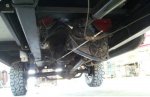
I believe it's an old style loadstar type oil pan, but not sure. It's about 9 1/2 inches deep at the front, and the front sump part goes back about 9 1/2 inches, a little less at the bottom, and a little more at the top of the sump hang-down. If you count the drain plug, and pan part around the drain plug, it would be a little deeper than 9 1/2 inches but the tie rod has pushed (squished) that part of the pan upward, so the drain plug is even with the rest of the pan's bottom. Makes it very difficult to fit a socket to change oil. Eventually hope to upgrade to a Dana 70 so the tie rod will be behind the axle, like in the picture below.
 

Attachments

  • image018.jpg
    image018.jpg
    36.2 KB · Views: 930
Back
Top