overdrivesteve
Member
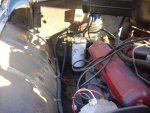
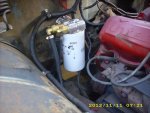
Another possible point of confusion I had to clear up before recommending this filter was its only listed application, carrier refrigeration units. This could have meant it’s intended to filter the refrigeration compressor’s oil on the refrigeration units of large high-rise office buildings, which would render it useless for our vehicles. But baldwin assured me in an email that was not the case, but rather it’s the filter for the engines that drive these refrigeration compressors, especially in semi-trucks. And they assured me it’s used in other truck engines too. It just happens to initially be designed for the engines that drive the carrier refrigeration units.
This is the only baldwin filter with no average efficiency rating because despite its very fine particle filtration, it’s off the scale with its flow-ability rating at normal operating pressures.
.
- - - - - - - - - - - - - - - -
oem notes:
.
anytime you see the word oem in the attached tables, it means baldwin is the original equipment manufacturer for that filter . wix won’t tell you that kind of info, but I suspect wix at one time was the oem for IH with its 51452 filter . no proof, just a hunch .
.
- - - - - - - - - - - - - - - -
synthetic filter notes:
.
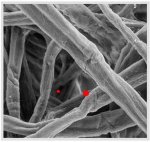
Here is a quote about synthetic media, but don’t recall where I got it from: “an engineered synthetic media is course on the outside and progressively finer toward the inside effectively increasing its filter area by "filtering in depth". All filter media to some extent filters in depth but the synthetic media can be so much more uniform in thickness and spacing that not only are comparisons between cellulose and synthetic area based on visual inspection or area meaningless, but visual comparisons between different synthetic media also can not be done”.
I would change that slightly to read “meaningful visual comparisons can not be done without a microscope”. That’s why engineering data like baldwin provides and wix won’t is so important when choosing to upgrade your engine’s filtration system/filter.
.
- - - - - - - - - - - - - - - -
by-pass valve notes:
.
our engines definitely need a filter with a by-pass valve (which should be 8 psi) . this allows oil to flow through to the engine when the filter becomes too plugged-up with debris to allow the oil to flow through its filtering medium . and the by-pass valve allows the oil to flow through to the engine when the oil is too thick or cold to flow through the filtering media, which frequently happens when the engine is first started on a cold morning with a paper filter . unfortunately every time the valve opens to allow the oil to flow through, that oil is unfiltered, dirty oil .
there are two schools of thought regarding the best location for the by-pass valve . one is that the best place is at the top of the filter so the unfiltered oil does not wash across the dirty side of the filter first, collecting more contaminants before entering the engine .
the other, held by baldwin, is that actual testing has determined it really doesn’t matter where the valve is located . the contaminants are lodged in the filter medium, and either way the valve is below the threads, and the swirling, pulsating oil will still pull any loose contaminant not embedded in the filter’s medium and pump it through your engine in addition to the other unfiltered oil when the bypass valve is open . and if your filter is so loaded with contaminants that it’s not all imbedded in the filter medium, but rather sitting loose at the bottom of the filter can, then you should have changed your filter long ago as it’s now in a fully loaded state where the filter is already mostly operating in a state where the by-pass valve is always open .
just another reason why it’s important to replace your filter regularly .
.
- - - - - - - - - - - - - - - -
.
I was going to describe the specifications about each filter and why I ranked it where I did, like I did with the first filter, but I can see now, if I did that, this post would be 20 pages long. So open a second window for the attachments as I refer to them for filter specification details and I’ll keep my remarks to a minimum, only stating my reasons for ranking it where I did. For flow rates I did not list all the test points in the attached tables, only the top and bottom published flow specification for each filter.
.
- - - - - -
bt217
bt237
.
these are exactly the same filters in every way, per baldwin, except they have different part numbers for marketing/oem purposes .
I ranked this set of filters second because of their good flow rate but especially because of their exceptional ability to hold a lot of “dirt”, almost 50 grams with 515 sq . in . of filter paper . and the only filters with substantially finer filtration than these two filters (other than the b7311-mpg) are the two b2 series of filters, but their flow and filter capacity can’t compete, so that leaves this set of filters as my second choice .
.
- - - - - -
bt251
.
I ranked this third because it doesn’t have quite as much contaminant holding ability as the previous set of filters. However it does flow better than the above filters because it doesn’t have a standpipe or as much filtering paper stuffed into the can. And if you consider the better flow (less pressure drop) to be more important than the extra contaminant holding ability, I see where you could easily rank it above the bt217/bt237 set of filters. But these filters all flow so well, I don’t know if the pressure difference would be noticeable until they start to reach the limits of their dirt holding capacity. Perhaps someone some day can try both and let us know if there is any noticeable pressure difference between the bt251 and the other filters.
.
- - - - - -
b2-hpg
.
this comes in at the top of the 5 inch filters because it has good flow, great contaminant filtering ability and the best dirt holding capacity of any 5 inch filter .
.
- - - - - -
b2
.
With a little better flow (less pressure drop) and about the same or slightly worse filtering ability than the b2-hpg, but because of much less contaminant holding ability, I rank this below the b2-hpg. But here again, if you consider the flow/pressure drop more important, I can see ranking it above the b2-hpg. But at this point I don’t know if the very slight difference in flow characteristics would equate into a noticeably different engine oil pressure reading. I suspect it would not until the filter begins to approach the limit of contaminant holding ability. That’s why when things are nearly equal I will go with the filter that can hold the most contaminants.
.
- - - - - -
bt216
.
I debated if I should include this filter in the list of the best of the best at the top of the post . it appears to have almost double the flow of the other 5 inch filters above, and the same contaminant holding ability as the best 5 inch filter, the b2-hpg, both very important to the ranking of the filter . but it achieves this by doubling the size of the holes in the filtering medium compared to the other 5 inch filters . and based on my premise that the most important requirement of a filter is to filter, is the reason why I did not put this filter in the list of the best of the best . but study the specifications in the attached tables as you May find you would prefer it to the other filters if you have to run a 5 inch filter . it has the same filtering rating as some of the 7 inch filters .
.
- - - - - - - - - - - - - - - -
wix oil filters table attachment:
.
- - - - - -
51459
.
The 51459 filter seems to be the verifiably best filter of any of the wix filters. It has a higher capacity (therefore should hold more “dirt” and flow better) than any of the wix 5 inch filters with similar or better filtering abilities compared to all the other wix filters, except for the unknown wix filter 57515, which has finer filtering. And as for applications, it has a long list of heavy duty and off-road truck applications with many similar to the same heavy-duty off-road applications as the wix recommended 51452 filter. And it has what I feel is a better by-pass valve psi rating for our low oil pressure engines – a rating of 7 to 9 psi as compared to most of the other filters’ 8 to 11 psi ratings. And it’s the only wix filter where their beta ratios and nominal micron rating specifications seems to be almost congruent. But because of its lack of technical data, I cannot rank it higher among the 7 inch filters. Based on applications, and that’s about all I have to go on with wix, it should be an excellent filter for our engines. It’s the second filter I ever put on my IH 304 v8 truck, and presently have on there now as of the date of this post. Once I install an accurate oil pressure gauge to supplement the dash gauge, I will be able to provide some actual numbers.
.
- - - - - -
51773
.
the 51773 filter wix says is the high capacity version of the popular 51515 . but according to their published data, it doesn’t filter anywhere near as well as the 51459, or any baldwin 7 inch filter, and there is no beta ratio data published for the 51773 filter . consequently it does not make the recommended grade . it’s mostly used on a lot of Ford big cu in engines, and a few diesels . and I’m sure it’s a good filter that you can use ok, but why when there are other better filters available .
<<<<< part 4 continued below >>>>>
This is the only baldwin filter with no average efficiency rating because despite its very fine particle filtration, it’s off the scale with its flow-ability rating at normal operating pressures.
.
- - - - - - - - - - - - - - - -
oem notes:
.
anytime you see the word oem in the attached tables, it means baldwin is the original equipment manufacturer for that filter . wix won’t tell you that kind of info, but I suspect wix at one time was the oem for IH with its 51452 filter . no proof, just a hunch .
.
- - - - - - - - - - - - - - - -
synthetic filter notes:
.
Here is a quote about synthetic media, but don’t recall where I got it from: “an engineered synthetic media is course on the outside and progressively finer toward the inside effectively increasing its filter area by "filtering in depth". All filter media to some extent filters in depth but the synthetic media can be so much more uniform in thickness and spacing that not only are comparisons between cellulose and synthetic area based on visual inspection or area meaningless, but visual comparisons between different synthetic media also can not be done”.
I would change that slightly to read “meaningful visual comparisons can not be done without a microscope”. That’s why engineering data like baldwin provides and wix won’t is so important when choosing to upgrade your engine’s filtration system/filter.
.
- - - - - - - - - - - - - - - -
by-pass valve notes:
.
our engines definitely need a filter with a by-pass valve (which should be 8 psi) . this allows oil to flow through to the engine when the filter becomes too plugged-up with debris to allow the oil to flow through its filtering medium . and the by-pass valve allows the oil to flow through to the engine when the oil is too thick or cold to flow through the filtering media, which frequently happens when the engine is first started on a cold morning with a paper filter . unfortunately every time the valve opens to allow the oil to flow through, that oil is unfiltered, dirty oil .
there are two schools of thought regarding the best location for the by-pass valve . one is that the best place is at the top of the filter so the unfiltered oil does not wash across the dirty side of the filter first, collecting more contaminants before entering the engine .
the other, held by baldwin, is that actual testing has determined it really doesn’t matter where the valve is located . the contaminants are lodged in the filter medium, and either way the valve is below the threads, and the swirling, pulsating oil will still pull any loose contaminant not embedded in the filter’s medium and pump it through your engine in addition to the other unfiltered oil when the bypass valve is open . and if your filter is so loaded with contaminants that it’s not all imbedded in the filter medium, but rather sitting loose at the bottom of the filter can, then you should have changed your filter long ago as it’s now in a fully loaded state where the filter is already mostly operating in a state where the by-pass valve is always open .
just another reason why it’s important to replace your filter regularly .
.
- - - - - - - - - - - - - - - -
.
I was going to describe the specifications about each filter and why I ranked it where I did, like I did with the first filter, but I can see now, if I did that, this post would be 20 pages long. So open a second window for the attachments as I refer to them for filter specification details and I’ll keep my remarks to a minimum, only stating my reasons for ranking it where I did. For flow rates I did not list all the test points in the attached tables, only the top and bottom published flow specification for each filter.
.
- - - - - -
bt217
bt237
.
these are exactly the same filters in every way, per baldwin, except they have different part numbers for marketing/oem purposes .
I ranked this set of filters second because of their good flow rate but especially because of their exceptional ability to hold a lot of “dirt”, almost 50 grams with 515 sq . in . of filter paper . and the only filters with substantially finer filtration than these two filters (other than the b7311-mpg) are the two b2 series of filters, but their flow and filter capacity can’t compete, so that leaves this set of filters as my second choice .
.
- - - - - -
bt251
.
I ranked this third because it doesn’t have quite as much contaminant holding ability as the previous set of filters. However it does flow better than the above filters because it doesn’t have a standpipe or as much filtering paper stuffed into the can. And if you consider the better flow (less pressure drop) to be more important than the extra contaminant holding ability, I see where you could easily rank it above the bt217/bt237 set of filters. But these filters all flow so well, I don’t know if the pressure difference would be noticeable until they start to reach the limits of their dirt holding capacity. Perhaps someone some day can try both and let us know if there is any noticeable pressure difference between the bt251 and the other filters.
.
- - - - - -
b2-hpg
.
this comes in at the top of the 5 inch filters because it has good flow, great contaminant filtering ability and the best dirt holding capacity of any 5 inch filter .
.
- - - - - -
b2
.
With a little better flow (less pressure drop) and about the same or slightly worse filtering ability than the b2-hpg, but because of much less contaminant holding ability, I rank this below the b2-hpg. But here again, if you consider the flow/pressure drop more important, I can see ranking it above the b2-hpg. But at this point I don’t know if the very slight difference in flow characteristics would equate into a noticeably different engine oil pressure reading. I suspect it would not until the filter begins to approach the limit of contaminant holding ability. That’s why when things are nearly equal I will go with the filter that can hold the most contaminants.
.
- - - - - -
bt216
.
I debated if I should include this filter in the list of the best of the best at the top of the post . it appears to have almost double the flow of the other 5 inch filters above, and the same contaminant holding ability as the best 5 inch filter, the b2-hpg, both very important to the ranking of the filter . but it achieves this by doubling the size of the holes in the filtering medium compared to the other 5 inch filters . and based on my premise that the most important requirement of a filter is to filter, is the reason why I did not put this filter in the list of the best of the best . but study the specifications in the attached tables as you May find you would prefer it to the other filters if you have to run a 5 inch filter . it has the same filtering rating as some of the 7 inch filters .
.
- - - - - - - - - - - - - - - -
wix oil filters table attachment:
.
- - - - - -
51459
.
The 51459 filter seems to be the verifiably best filter of any of the wix filters. It has a higher capacity (therefore should hold more “dirt” and flow better) than any of the wix 5 inch filters with similar or better filtering abilities compared to all the other wix filters, except for the unknown wix filter 57515, which has finer filtering. And as for applications, it has a long list of heavy duty and off-road truck applications with many similar to the same heavy-duty off-road applications as the wix recommended 51452 filter. And it has what I feel is a better by-pass valve psi rating for our low oil pressure engines – a rating of 7 to 9 psi as compared to most of the other filters’ 8 to 11 psi ratings. And it’s the only wix filter where their beta ratios and nominal micron rating specifications seems to be almost congruent. But because of its lack of technical data, I cannot rank it higher among the 7 inch filters. Based on applications, and that’s about all I have to go on with wix, it should be an excellent filter for our engines. It’s the second filter I ever put on my IH 304 v8 truck, and presently have on there now as of the date of this post. Once I install an accurate oil pressure gauge to supplement the dash gauge, I will be able to provide some actual numbers.
.
- - - - - -
51773
.
the 51773 filter wix says is the high capacity version of the popular 51515 . but according to their published data, it doesn’t filter anywhere near as well as the 51459, or any baldwin 7 inch filter, and there is no beta ratio data published for the 51773 filter . consequently it does not make the recommended grade . it’s mostly used on a lot of Ford big cu in engines, and a few diesels . and I’m sure it’s a good filter that you can use ok, but why when there are other better filters available .
<<<<< part 4 continued below >>>>>