Are there different grades of Wix oil filters?

Rusty Scout

Member
Reason why I am asking is I paid $8 for a black wix 51515 while the white carquest filters which are supposedly made by wix are only about $4. The carquest box that the filter came had fine print which said affina filtration. Perhaps the price difference reflects quality????
 
You would have to take a hack saw and cut the two filters apart to find out.

But, most likely there is a difference in the amount of "filter material" in the two filters -- whoever made them.

A couple people hacksawed corvair oil filters (6 - 8) apart many years ago and there was a big difference in the construction.

On air filters, you can easily see the difference -- if you put a wix air filter next to a fram air filter.
 
Affinia is the parent company of wix. Yes they make many grades of filters including most of carquest's and napa's private label filters. They do make multiple grades of filters, particularly in the private labels. Cq's "red" napa's "pro-select" wix "pro-tec" are the basic filter while the "blue" "gold" and standard wix are the premium units that have better quality materials, and more filter media. Napa's nascar select fits in the middle, at least price wise.

Personally I use motorcraft, the best bang for the buck. The important filtration features of the purolator pureone w/o the expensive "bed liner" exterior or teflon coated gasket.
 
As eric states, there are a number of different grades of filters

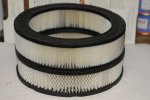
fwiw here is a picture of two air filters -- bottom is a stp air filter (made by ???) and top is a wix filter.

You can see the different number of "pleats" -- same applies to oil filters...
 

Attachments

  • AirFilter.JPG
    AirFilter.JPG
    197.8 KB · Views: 10,006
I work at napa. I live in wv, napa filters are made by wix filtration corp. The napa gold (black) filter is around $6 for a 1515 filter. Which is the napa number for a wix 51515. The gold filter filters down to 19 microns, with a glass enhance media. And also we sell a pro select filter (white) with part number 21515 and it sells around $3 it also features a rubber anti drain back valve where as the golds is a silicon valve. Hope this helps a little more with everything else.
 
Will the napa gold 1515 fit the oil filter conversion setup? I have a s80 and it originally had the canister style with the filter insert, the po converted it to the screw on style filter.
 
Baldwin b7231 is the filter I use on all of my IH eqiupment except my 75 as it's a different animal with the front suspension and so I just run the baldwin b2 which is the stock application. I swear by baldwin. Very reasonable pricing, not as easy to get as say a napa filter but I just buy a case or whatever the distributor has in stock when I go down there.

baldwin b7231


Edit: having trouble linking the actual filter page but search b7231
 
I must be a little crazy, I use k&n on everything I own, my k5, my Scout, my hd, everything I own has a k&n oil filter and k&n air filter!
 
got it . El cheapo carquest white filter no go. Black expensive wix 51515 yes.

.
- re wix:
no, the 51515 filter is only made for three IH engines, the l4 3.2l 196 cid engine, the mv404 (6.6l) engine and the 404 gas engine .

the correct spin-on wix filter for most IH gas engines is 51452 .
this is for most every pickup, Travelall, and Scout with any gas engine from the l4 3.2l 196 cid engine through the v8 6.4l 392 cid engine . although I don't see any performance specification difference between the two on their web site catalog (other than burst pressure), there are a lot of other oil filter specs not mentioned, and there must be a reason why wix does not recommend them both equally for all these engines . I looked at both recently at an auto parts store, and the 51452 definitely felt heavier .
http://www.wixfilters.com/lookup/pa...rfriendly.asp?url=partentry.asp&partnumber=b2
B7231:
http://catalog.baldwinfilter.com/pa...iendly.asp?url=partentry.asp&partnumber=b7231

.
- re k&n:
as for the k & n oil filters, the ps-3001 and hp-3001 have the 8 to 11 psi by-pass, but no mention of actual micron filtering size . all they say is 99% contaminates removed, but not 99% of what size . they also have an interesting reusable oil filter I never saw before:
http://www.knfilters.com/search/pro...hed specs on the b7231 ? thank you . steve
 
Last edited:
This is interesting steve. I'd never visited the wix website to browse through their application charts before today. On the occasion of the first lof I did on my Scout many years ago, I went with a purolator filter because that's what I knew and used on my daily drivers. In the purolator application guide, l30001 is the recommended filter for the IH i4 and sv8 offerings. This part number crosses to a plethora of Ford and chrysler engines from the 60's through the 80's and beyond. So when I switched to the wix brand, I applied the same crossing logic in making my filter selection of 51515, as it is often easier to find parts for the big 3 than our obsolete orphans. I've never had any issues with this filter on my sv8 engines. According to the spec sheets below, the burst pressure is the only difference between the two. With the low operating pressures these lubrication systems generate, I find it odd that a canister with such a high burst rate would be a necessity. Also odd is that for the '73-'74 scouts with 196 engine, the 51515 filter is spec'd, but not for the 152 and 196 engines for any other years. There's nothing different about the lubrication systems in those engines from one year to the next, the next, the next...so on and so forth. Good enough for one or two years, good enough for all. This part of the engine wasn't subject to radical evolution and change over the production years. Anyway, the specs for both wix filters are below for comparison/contrast.

51452 specs:
part details

51515 specs:
part details
 
this is interesting steve. I'd never visited the wix website to browse through their application charts before today. On the occasion of the first lof I did on my Scout many years ago, I went with a purolator filter because that's what I knew and used on my daily drivers. In the purolator application guide, l30001 is the recommended filter for the IH i4 and sv8 offerings. This part number crosses to a plethora of Ford and chrysler engines from the 60's through the 80's and beyond. So when I switched to the wix brand, I applied the same crossing logic in making my filter selection of 51515, as it is often easier to find parts for the big 3 than our obsolete orphans. I've never had any issues with this filter on my sv8 engines. According to the spec sheets below, the burst pressure is the only difference between the two. With the low operating pressures these lubrication systems generate, I find it odd that a canister with such a high burst rate would be a necessity. Also odd is that for the '73-'74 scouts with 196 engine, the 51515 filter is spec'd, but not for the 152 and 196 engines for any other years. There's nothing different about the lubrication systems in those engines from one year to the next, the next, the next...so on and so forth. Good enough for one or two years, good enough for all. This part of the engine wasn't subject to radical evolution and change over the production years. Anyway, the specs for both wix filters are below for comparison/contrast.

51452 specs:
part details

51515 specs:
part details


Hi,
I don't know IH engines too well, so I did not know for sure. I suspect because wix is such a big corporation, and there are so many different applications for both filters, that one part of the company did not know what the other part of the company was doing. So two different but basically interchangeable filters were developed, but each with their own applications. I held carquest and the two other filters in my hands at the same time. The 51452 felt slightly heavier than the other two, but might only be a heavier can, as if our engines might accidentally put out 300 psi. ;-)

I'm still researching the b7231.
 
Last edited:
And to further the discussion, partsmaster is a knock-off made by wix. The numbering system is very similar. 61515 is a direct cross to 51515. Interestingly enough there is no partsmaster 61452 filter. The hastings filter for the i4 and sv8 engines is hf 115 in case you care to research that option.
 
Thanks.

I'm still researching the b7231 filter. Apparently this is a 15 micron soak-back oil filter used in the railroad industry. That's why its not found in our automotive applications. A soak-back filter is used by an electric oil pump to pump oil into large industrial diesel engines after the engine is shut off. It is used to keep the components, especially the turbo bearings, from over-heating and melting after the engine is shut off.

At 15 microns it filters better than the 21 micron wix filters or 30 micron loadstar filters. Now if only I can determine if it has a bypass valve and the psi rating of that valve. Hopefully its in the 8 to 10 psi range. If so, then that's the filter I will be using. At 15 micron filtering, no wonder ihpartschad likes this filter so well. I will too...

Steve
 
I know that there are a lot of web sites out there with cut away views of filters, and that discuses the deference's between cardboard inserts and metal, so I wont go into it here, but a sure way to tell that there is a difference is to just pick them up. The weight difference between a good quality filter and cheap one is huge.

For me its motorcraft all the way, or hastings. They make filters for some of the big three.

When I worked at the Ford dealer, we would have costumers complain about lifter rattle on cold start up on the 4.0 and 5.0l engines. We would tell them it was because they were not using a motorcraft filter with a check valve to prevent lifter leak down. To this we would usually get a bs! " your just trying to charge me more for a filter". We would offer to change their oil, and if the lifter rattle didn't go away, the oil change was on us, and we would pay for any oil filter of their choice. We never had to do a refund.

I use the fl1a on my 80. I have had 5 rangers over the years, all of them with multiple 100,000 miles on the clock with motorcraft oil and filters. If its good enough for that, its good enough for the Scout.

Now about oils...
 
The use of the napa 1452 vs the 1515 May go back to the original Ford filters. On the original design (years ago) Ford spin on filters the gasket did not extend above (below?) the base of the filter at the outside. When used on the IH and other applications the base of the filter would contact before the gasket was compressed completely. On the Ford application the filter base was designed so this wasn't a problem. Later on the spec was changed and all Ford style filters now that I know of the gasket extends past the filter base so this isn't a problem.
 
Hi,

I've had several extensive conversations with wix technical support. I wanted to get to the bottom of which filter is best, and if there really is any difference between the 51515 and the 51452.

As explained to me, with wix, everything is application-driven. The 51452 has a high burst pressure rating only because this filter is also used for transmissions. And that is the only difference shown in the books (or on the web site), for these two filters, but that is only part of the story.

To summarize, the 51515 is really a car filter. It is the filter to use if your IH never sees any bumps larger than the speed bumps by the schools in your residential neighborhoods.

However, as explained to me, if you drive your truck frequently off-road, along bone-jarring wash-board dirt roads, the 51452 is the filter you should use. Both filters use the same media to filter your oil, with the same rated by-pass, anti-drainback, and filtering capacities, but the 51452 is the ruggedly-built filter, constructed to withstand prolonged and excessive vibration, and from a construction viewpoint, it is much more than a 51515 with a stronger can.

Remember, wix filter selections are application driven. And if you do a check for the applications wix lists for both filters, you will see the 51515, with some exceptions, is mostly manufactured for cars and light trucks, while the 51452 is manufactured mostly for tractors, and off-road construction equipment, many with diesel engines and no suspension. Other than a couple land rovers, I did not see any "car" applications at all in the 51452 application list, although the list is long and there might be some there. As an IH owner it should make you proud that IH is the only light trucks rugged enough to be listed in the same category as the off-road tractors, excavators, etc.

So to answer the question "are there different grades of wix oil filters" the answer is definitely a yes, although that difference might not be apparent with a preliminary product specification search.

In addition, if that does not make you want to consider which wix filter is proper to use, remember that by using the filter they recommend for our IH trucks, if that filter should ever fail in a way that damages your engine, wix will repair or replace that engine on their dime.

As far as filter interchanges, don't trust the web sites or the books. The baldwin b2 interchanges with the wix 51515, but that is as far as I will presently trust it. If you're using another brand other than wix or baldwin, look in their application pages, not their part number interchange tables. Baldwin, as a manufacturer heavy into industrial applications, has a potential to offer filters better than the wix 51452, but every time I follow-up on a table part number cross-reference, the specifications for the two filters are not the same, and sometimes are not even close.
I'll add another post here as soon as I receive the technical info I've requested from baldwin and have a chance to study it.

Other than wix and baldwin, are there any other major auto/truck filter manufacturers I should research? (hastings and purolator are part of baldwin)

steve
 
Last edited:
I used the wix 51515 once in my '67 1200. Will never use it again. The lifters would tap for about 10-15min after I started it up. Never did that with fram (yea that's right), motorcraft, or group7 filters. Honestly, I don't care if some bigger particulates are floating around in the oil. If the lifters are tapping and starving for oil, its going to do a lot more damage than some tiny particulates in the oil. Just my $.02
 
Interesting observations, but your testimony and reasoning won't convince me to spin a fram filter onto my rusty junk. Not after I've seen what they look like inside. No thanks.
 
I used the wix 51515 once in my '67 1200. Will never use it again. The lifters would tap for about 10-15min after I started it up. Never did that with fram (yea that's right), motorcraft, or group7 filters. Honestly, I don't care if some bigger particulates are floating around in the oil. If the lifters are tapping and starving for oil, its going to do a lot more damage than some tiny particulates in the oil. Just my $.02

Lifters tap 10 to 15 minutes after startup? If it was 10 to 15 seconds I would guess it could be the anti-drainback valve is not working – a common problem for many cheap filters or wrong oils. But for 10 to 15 minutes, all I can think is the filter must be plugged and the bypass is not working for some reason. Or more probably, a wrong oil got put into the engine somehow when you changed the oil and put on this filter, such as by a mislabeled can of oil. Either way, if it did that when new out of the box, I would have put in a claim to wix for engine damage. That filter is far too common and has been installed on far too many vehicles over far too many years to think that is anything but a once in millions chance of happening. And I'm inclined to think it was more probably a mislabeled can of oil. But a claim and subsequent analysis by wix could have determined which it was.

Makes me think of the time many years ago when I was going to high school, and was working in the corner liquor store. As I was stocking the shelf I noticed a bottle of 7-up had something in it. It was a plastic straw in a filled and capped bottle of 7-up, direct from the bottling factory. This was long before they ever invented twist-off bottle caps. I bought it and had it for years as a novelty.
My only point is that yes, I agree serious damage could be done to your engine, and some damage probably was done, but I think it’s a once in a million anomaly, like finding a plastic straw in an unopened bottle of soda. I still would not hesitate to use a wix 51515 filter in my vehicle. This filter is still a major seller for wix, with many years to its name without incident.

Here are some general do’s and do not’s regarding all oil filters, direct from wix technical support.

-1-
do not ever use an oil filter that has been dented. Return it to the store for a replacement. The dent can put a crease or strain on the filter media causing it to prematurely fail internally at that point.

-2-
do not use a filter (at least for our daily-driver vehicles) with an “r” after the part number, such as a 51515r. That is a filter for racing applications only, with a very high flow rate, but very poor filtering ability.

-3-
do not over-tighten a filter when installing it. Over tightening can actually make it not seal as well, possibly causing it to leak.

-4-
always apply a drop of oil to the gasket before installing a spin-on filter. This includes a drop of oil on the gasket of spin-on gasoline filters too, per wix.

-5-
an oil or fuel filter made for diesel engines can be used on gasoline engines (providing all other specs such as flow rate, by-pass valve psi etc. Are compatible). However, an oil or fuel filter made for a gasoline engine should never be used on a diesel engine. That’s because diesel has a way of attracting moisture that will quickly destroy a filter designed for a gas engine.

-6-
change the oil filter at least once a year, regardless of the number of miles driven. Most oil filters (but not all) use paper (or a combination of paper and glass on newer filters) as the filtering medium. And paper, soaking in oil for an extended time will degrade (I forget the word they used) over time.


-7-
if you pull an old vehicle out of a barn that’s been sitting for years and start it up, you should replace the oil filter before you give it its first crank of the starter, unless you’re planning on an immediate engine rebuild. An old oil-soaked paper filter can very likely blow out a small piece of the filtering medium from the newly applied oil pressure, sending it and everything collected in that filter throughout your engine. Wix labs is very good at determining how long a filter has been in use (or exposed to oil) and it will not honor any claim for engine damages from a filter installed 5 or more years. They would not tell me the exact install-time cut-off point, but I got the impression it was on a case by case basis prior to 5 years.

-8-
generally speaking, the larger the fluid (oil) reservoir (pan), the larger the filter should be to get the same amount of use out of the oil as a smaller system. In other words, ideally if you have a loadstar type engine oil pan on your gas v8 engine, and this pan holds 9 or so quarts, ideally you should use the larger 7 in filter. Otherwise you May be changing the oil more often than necessary as a smaller filter will get loaded up making the oil dirty before the oil has reached the end of its useful life. This May somewhat be rectified by changing the filter more than once between oil changes.

In my case, I checked the oil after taking possession of my first IH. It did not appear to be very dirty, (and it has a deep pan that holds about 9 quarts of oil) so at first I only replaced the carquest filter with a wix 51452 filter. I noticed almost a doubling of oil pressure both cold and hot idle on my dash gauge with the same old oil.

-9-
and finally, my own advice. If you change brands of filters, don’t depend on interchange tables to determine which filter you should use based on the filter you were using. Look in their application section to find your vehicle/engine and their recommended filter. Or, if you have a IH sv v8 or equivalent gas engine, look in my next post (as soon as I have time to type it). There I list the best of the best filters to use in our engines. Those filters were all chosen based on their engineering specifications and compatibility with our gasoline engines, and any cross to another brand found in cross-reference tables May not only be incompatible, but it could do serious damage to the engine. If using wix or baldwin, just use one of the filters I recommend in my next post below (it will be a very long post, as soon as I have time to type it). If using another brand, use whatever they have listed for the application, and not what they list as their crosses with these wix and baldwin oil filters.

In my research I found three instances in baldwin’s cross-reference tables where they were referring incompatible oil filters to replace wix filters, and one in the wix cross-reference tables where they were replacing baldwin filters. Who knows how many crosses in the tables of the other brands are wrong. To baldwin’s credit, while they were on the phone with me, they pulled up their engineering test results for the wix filters in question, and agreed they were recommending the wrong baldwin filter equivalents. They made some report while I was on the phone with them, and told me they would change their catalog. But who knows how long it will take for the changes to appear in their next catalog edition, or in their web site, or how long for that new catalog edition to replace the old in auto and truck parts stores. As for wix, when brought to their attention in my product analysis/comparison quest, perhaps they did not understand me, but basically they told me they’re “not responsible for bad cross reference information” in their catalogs. More on their poor attitude will be mentioned in the next post.

-10-
finally, the best way I’ve found to determine when to change the oil filter is to have a good oil pressure gauge connected to your engine. And when you see about a 5 psi drop in oil pressure as opposed to your pressure reading with a new filter, that is an indication your oil filter has filled with contaminants. And if your pressure has dropped 7 psi or more, your filter is no longer doing its job as the oil is now only going through the bypass valve.

You May want to bookmark this thread because of the hundreds of filters that will “fit” our v8 gas engines, (yes, I analyzed almost 300 that “fit”) the next post will cover the dozen or so very best of the best oil filters in a head-on, no holds barred, no favoritism, technical comparison. There might be some there you never before considered.

Steve
 
Last edited:
* * * * *
note: because I talk too much (and exceeded the posting limits of the forum), this post is divided into 5 sections. The tables referred to are under the last, 5th section of this post.
* * * * *

people upgrade their drum brakes to newer technology disc brakes, and their engine with newer technology electronic ignition and fuel injection, so to go along with these upgrades why not upgrade your engine’s oil filtering with a newer filtration technology, rather than using something that was designed 40 years ago?

Therefore the question “are there different grades of wix oil filters?” to me contains an implied second question of “what is the best wix oil filter for our engines?” and more generally, “what is the best (any brand) oil filter for the IH sv v8 gasoline engine?

So here’s the answer directly, so you don’t need to read any of the other supporting info I type below. The following information applies to the IH v8 gasoline engines 304, 345, and 392 but also applies to a lot of other engines too, both IH and non-IH. You be the judge for your application.
.
- - - - - - - - - - - - - - - - - - - -
* * * * * * * * * * * * * * * * * * * * * * * * * * * * * * * * * * * *
.
– I –
the best: baldwin: b7311-mpg
.
if you have the room, presently the very best of the best of all the spin-on full-flow oil filters we could put on our engine, and by a wide margin over any stock filter, is the synthetic oil filter made by baldwin, the b7311-mpg .
.
– II – the best 7 inch (referred to as 2 quart) oil filters in preferred order:
– 1 – baldwin: b7311-mpg - the best of all wix/baldwin oil filters
– 2 – baldwin: bt217, bt237 - same filter, different part numbers
– 3 – baldwin: bt251
– 4 – wix: 51459
.
– iii – the best 5 inch (referred to as 1 quart) oil filters in preferred order:
– 1 – baldwin: b2-hpg
– 2 – baldwin: b2
– 3 – wix: 51452
– 4 – wix: 51806
– 5 – wix: 51515
.
* * * * * * * * * * * * * * * * * * * * * * * * * * * * * * * * * * * *
- - - - - - - - - - - - - - - - - - - -
.
For our daily driver applications, I would always prefer any 7 inch filter listed here to any 5 inch filter. They flow better, with less pressure drop, have more contaminant holding ability, and it’s less likely the by-pass valve will open on cold starts because of the greater flow/media filtering area.

Note that all of the filters listed above meet and most far exceed the original oem requirements with technologies not available 40 years ago. I would not hesitate to use any of the above listed filters on my truck.

The goal of this whole post is maximum protection and ultimately extended time between engine rebuilds. My IH 304 holds 9 quarts of oil. I don’t know how typical that is of these v8 engines, but that’s a lot of oil and $$ at oil change time. I don’t need that oil to get dirty from an inferior filter any sooner than possible.
.
- - - - - - - - - - - - - - - - - -
filters considered:
.
due to time constraints, I only looked at the oil filters from two manufacturers, wix and baldwin . but of the thousands of oil filters wix and baldwin makes, there are 147 wix and 226 baldwin full-flow spin-on oil filters that will “fit” our engine . yes, I counted and looked at them all . and this is not taking into consideration the other “brand” filters they manufacture such as napa, carquest, hastings, purolator, etc . both manufacturers seem to keep their best filters in their name only . hence you will not find a napa equivalent to the wix 51452, or a purolator equivalent to the baldwin b7311-mpg filter . therefore in this comparison I did not ever look at, consider, or in any way include the other “brands” these two companies manufacture .

our v8 engines could possibly have either of two different sizes of spin-on oil filter threads . the oil filter plate that attaches to the block in a loadstar* type of gasoline v8 engine application uses a 1 – 12 oil filter thread which is different from the oil filter plate that attaches in a Scout or pick-up application with the exact same gas v8 engine block . that plate has an oil filter thread of 3/4 – 16 . and all those other loadstar type filters were looked at too .

but as it turns out if you have a loadstar type gas engine, and want the very best filter present production technology has to offer, you need to get an oil filter plate from a Scout or pick-up truck engine, put it on your engine block, and run one of the 7 inch filters listed above . I have not found any loadstar type filter you can run that exceed the specifications, and most don’t come close, to the filters listed above . so based on that fact, that’s another reason why my belief is all the filters above meet, and most far exceed the requirements of the old IH v8 gas engines in all categories - for particle size captured, quantity of contaminants held, and equal or better less restricted flow . and in some cases significantly less restriction and much better oil flow than a stock** filter and therefore less pressure drop resulting in higher oil pressure for the engine . and all filters above and in the tables attached use the properly rated by-pass valve and contain the anti-drainback valve .

*note: I use the word “loadstar” to represent all vehicle applications larger than a 1 ton truck that use these gasoline engines .
**note: for the purpose of clarity and comparison in this post I am calling the wix 51452 or 51515 as “stock” .
.
- - - - - - - - - - - - - - - - - -
filters not considered:
.
By-pass oil filters were not considered. Although highly desirable as evidenced by their use on larger, more expensive engines, I would not recommend them because our oil pumps have such marginal reserve capacity. Although they (by-pass filters) could be used utilizing a small electric 12 volt oil pump, such as a weldon, mocal, exa-pump, tilton, shurflo, varna, or something custom from companies like www.enginegearonline.com/, etc., the additional plumbing introduces the potential for more leaks, especially when driving hard off-road.

Also stainless steel screen mesh filters, despite their use in aircraft and in race cars, were not considered.

Canister filters were also not considered as very little data is available on them.

And there are other oil filter manufacturers not considered but worth taking a close look at too, such as donaldson and racor come to mind. But in the end there is only so much time and so I concentrated on the two largest, most established companies that produce the largest selection of spin-on engine oil filters, wix and baldwin.

I have no brand loyalty. I have no pre-conceived idea or emotional preference to which brand filter is best. My conclusions are not based on “feeling” this brand or that brand filter is best because I’ve always used that filter all my life, or my friend’s supermarket butcher recommends it because its always worked great in his truck. Before I purchased my IH truck, I’ve never seen an IH pick-up truck before, and never met anyone who has owned an IH, and could care less about filters. A fram or a sears automotive brand was fine with me for my car. My filter conclusions above, starting from a clean slate, are unbiased and based solely on current and available published engineering data. Consequently you May see other filters here more highly rated than your “favorite” filter.
.
- - - - - - - - - - - - - - - -
filter requirements:
.
to me, the most important requirement of a filter is to filter . and the finer the contaminant particles it filters, the better for less engine wear . (for a frame of reference, 25 microns is about .001 inch) . and it must filter finer particles without increasing the pressure drop across the filtering medium . in other words, it must not cause your engine to see a lower oil pressure from increased resistance to flow just because it is filtering smaller particles . this also directly equates into better lubrication protection for your engine from the higher oil pressure, and better gas mileage from less parasitic drag losses, although that May not be noticeable .

in addition, the filter must provide a by-pass in the event it becomes plugged up with contaminants, or more importantly, when the oil is too cold to pass through the filter medium such as when the engine is first started on a cold morning . the by-pass valve allows continued full oil pressure to the engine, even though that oil is then dirty, unfiltered oil . for our engine, that by-pass setting should be at 8 psi .

also, it should contain an anti-drainback valve, so at start-up your oil pump does not need to refill your oil filter before pressurizing the remaining engine . but more importantly a one-way anti drain back valve keeps dirty oil from back-flushing into the engine from the filter when the engine is shut down . otherwise this could happen regardless of the filter’s mounting orientation .

some filters also contain a “standpipe” . all that does is allow the filter to be mounted in any direction, including pointed upward in addition to horizontal or downward . for our stock applications, a standpipe does not matter in any way . I just mention it only for those who May see that spec on some of the filters and wonder what that is all about .
.
- - - - - - - - - - - - - - - -
judgement criteria:
.
Despite the attempt by the filter manufacturers council (the organization that represents the entire north American filtration industry) to standardize testing procedures so comparisons between different manufacturers and their filters can be made, in reality they have not been very successful in doing so. There aren’t a lot of cross-over specs between manufacturers, so comparisons between the different manufacturers’ filters can be very difficult, at best.


<<<<< part 2 continued below >>>>>

 
And the comparisons between wix filters and baldwin’s filters are even more complex because each company takes an approach to their filters’ specifications/applications exactly opposite of each other. Wix takes the “application” approach where you tell them the vehicle, and they will tell you which filter they recommend. Consequently they see no need to share most of their filter specification data. But if you highly modify your engine, that leaves the wix phone tech just kind of guessing which filter to recommend, depending on their understanding of your modified engine and its intended use, and the time they have before they must move onto the next caller.

And many of the specs wix does share are very incomplete or make no sense. For example, they state all their filters have a maximum flow rate of 7 to 9 gallons per minute, but never mention at what pressure. Is that maximum flow of 7 to 9 gpm at 25 psi, 50 psi, 75 psi, or what? Higher pressures flow higher gpm but our engines are low pressure engines – compared to most present day engine manufacturers. And it becomes even more clearly a bogus spec by wix when they say all the filters (under consideration for our application) all flow the exact same maximum 7 to 9 gpm regardless if it’s a 3 inch filter with a paper medium such as the wix 51085, or a 5 inch filter, or a 7 inch filter using a synthetic filtering medium, or some other size/media combination. And they never state any minimum flow rate at lower pressures.

So how is one to select the best wix filter if they have made upgrades to their engine and want to upgrade to a newer technology with a better filter specification, rather than the 40 year old spec originally dictated? It’s very difficult with wix, but I’ve done my best to answer that question with this post.

Contrast the wix “application” approach to the baldwin’s “engineering specification” approach. Using the same example, baldwin will tell you exactly how well each filter flows compared to their other filters (if you ask them), or any other engineering spec requested too. For example, the b2 flows 1.5 gpm @ 3 psi; 3 gpm @ 5 psi; 5 gpm @ 10 psi; 7.5 gpm @ 15 psi; 9 gpm @ 20 psi; and 11 gpm @ 25 psi. And the b2 has 315.3 sq inches of filtering medium capable of holding 20 grams of contaminants. And this filter’s filtering is rated at 12 microns nominal and 30 microns absolute with 85.44% average efficiency. All these specs as compared to only the wix 7 to 9 gpm and 21 nominal micron rating specs. But baldwin only lists a handful of applications for the b2 when in reality it includes the same hundreds of applications as wix lists for its 51515 filter. So you can see this comparison and quest to find the best filters with the newest technologies for our engines has been no easy task.

The specifications for all the filters above and for a few close filters that would work as good filter replacements but that did not make the grade because they were not the “best” imho are in the two tables attached to the bottom of this post.

Wix is happy to share all kinds of general information about filters in general, as you can see by my previous posts. However they have told me both over the phone and in email that they will not share any specific technical information about any of their filters other than what is on their web site. For example, they will not disclose the square inch filtering area of their various filters. This, despite the fact that anyone can buy a filter, cut it open, unravel and measure for themselves the sq in. Area of the filtering media.

Basic information, such as nominal and absolute micron ratings, flow rates, the filtering area and contaminant holding ability are needed in order to do basic comparisons not only between the filters they sell, but also between their filters and their competitors’ (baldwin) filters. Consequently, for the filtering medium part of the comparison I can only use their nominal micron rating. But that is definitely not the only specification taken into account, as you will see by my comments below. The filter’s engineered specifications (all that were made available), intended applications, physical size, flow rates, and micron filter ratings, on filters with anti-drain-backs and proper by-pass valve psi ratings were all used in the filter comparisons. Chances are a couple of the wix filters could move up in placement if technical data was available on them. But in this comparison they fall where they do because I will only rate them based on the data they provide, and not what is “inferred” or what I “feel” about them.

The attachments at the bottom of this post contain tables comparing all the different filters listed above and their specifications, (or all that were made available), with a few other filters. Information for this post is culled from a stack of catalogs and technical brochures almost a foot high mostly from wix and baldwin, and some technical info from the filter manufacturers council in addition to multiple emails and phone discussions with the tech support of both companies.

Online retail price is mentioned for each filter in the attached tables but only for your comparison, and is sure to be different from place to place. Price was not taken into consideration for the selection of filters made, only the filters’ performance data was used. Prices in the table of baldwin filters were obtained from www.apartsdepot.com. And prices for the wix filters were obtained from www.rockauto.com Except for the last two were from http://woodys-auto-supply.com Because they were not listed online by rockauto.com. This is not an endorsement of these sellers, only the source of my price comparisons. And the prices are current as of April 11, 2013. Prices constantly change, but should hopefully stay in the same relative proportion to each other.
.
- - - - - - - - - - - - - - - -
baldwin oil filters table attachment:
.
- - - - - -
b7311-mpg
.
this filter flows much better than any other filter listed above (10 gallons per minute at only 3 psi, while other filters require 10 to 20 psi to achieve this flow), resulting in the least pressure restriction/drop of any of the filters . this has the resulting benefit of allowing the highest possible oil pressure throughout the engine of any above listed filter . (this is important for our low pressure engines) . and it does this while providing the finest particle filtration of any full-flow oil filter I’ve ever found that will fit our engines, (trapping particles 4 times smaller than a stock 51515 filter) . this high-end synthetic media filter has smaller passages to trap smaller particles, but can also pass more fluid through because it has more passages, thus increasing the inherent surface area . it provides 5 micron nominal and 20 micron absolute filtration as opposed to the wix 51515’s 21 micron nominal rating and unknown absolute micron rating . (in other words, the b7311-mpg filters far better than any other filter listed above, my most important requirement for a filter, while providing the least resistance to flow and therefore the highest oil pressure to the engine of any filter listed above, my second most important filter requirement) .

it holds 32.4 grams of contaminants in 463.1 sq . in . of filtration media, which is more than any stock filter, but not as much as other 7 inch filters . therefore this filter is best on regularly maintained engines for keeping the oil absolutely the cleanest of any full-flow filter I’ve found . but for a very dirty engine that has not had its oil changed regularly, you May want to first use the bt217 or bt237 as they hold the most contaminants of any filter at 49.5 grams . of course the largest, most efficient filter with the finest filtration with the best flow with the least pressure drop comes with almost the highest retail price of any filter, just under $12 a filter .

also note if you live in a cold climate: on a cold start your engine oil is much more viscous than at other times, creating a lot of resistance to flow through the pickup screen and passageways . cold oil has a very hard time passing through a cellulose paper oil filter, usually causing the bypass valve to open . and an open bypass valve May allow the crud the filter has already captured to flow through the engine . this is another example of when a high-flow synthetic oil filter such as this b7311-mpg would be better .

they (baldwin) do not usually record flow rates above 10 gallons a minute because a stock engine is only going to pump 3 gallons a minute, so anything more is unnecessary . therefore the b7311-mpg was only tested for flow up to 3 psi as there is no point going further, as who cares if it May flow 30 gallons per minute at 25 psi, if the engines are only capable of pumping 3 gallons a minute . bottom line, this filter has the least restriction to oil flow of any filter here .

however, this filter and all baldwin filters are cycle tested with oil pressure pulses of 0 to 100 psi 50,000 times to insure the integrity of the filter design . and all baldwin filters listed here have a burst pressure of 200 psi . so us starting an engine cold where the oil pressure spikes at 60 psi will not harm these filters . this was important to know as some of these filters in the attached tables have published flow ratings with pressures as low as 1 psi, so I needed to verify that each of these filters would perform properly at our 10 to 60 psi pressure range .


<<<<< part 3 continued below >>>>>
 
Back
Top