Aluminum Radiators for Scout II

ihpartsjeff

Administrator & Owner
Staff member
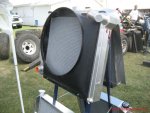
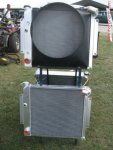
IH Parts America now has in stock aluminum radiators for all Scout II vehicles. Radiators are available for v8 engines but also the 4 cyl 196, 6 cyl amc engines and the diesel engines. Cost on radiators will be $289.95 for both auto and manual transmission(has built-in transmission cooler).

Order yours today!

This posting updated with what we currently have available for sale. For this reason some of the pictures shown in later posts are different than what you see below.

033pic.jpg


aluminum radiator for 1971-80 Scout II, terra or traveler w/ v8 & diesel engine
 

Attachments
  • IMG_2359.JPG
    IMG_2359.JPG
    47.4 KB · Views: 6,405
  • IMG_2360.JPG
    IMG_2360.JPG
    44.5 KB · Views: 6,390
Last edited:
Jeff....does the manufacturer of these units have the drawings/tooling for fullsize crossflow radiators as well??

That price point is excellent compared to other "conventional" oem replacement sources!
 
Not that I know of. This is a race shop back east that is making them and the owner happens to drive a Scout so he has a vahicle there to test for fit. If enough interest is made I can look into having them made for the fullsize rigs.
 
Hey Jeff,

is the surface area (square inches) of the radiator surface the same as the stock radiator, or more or less?

Are they 2 core, 3 core, 4 core?

Is there any estimation of how much more they will cool than a stock radiator?

How much do they weigh compared to stock?

Thanks,
 
hey Jeff,

is the surface area (square inches) of the radiator surface the same as the stock radiator, or more or less?

Are they 2 core, 3 core, 4 core?

Is there any estimation of how much more they will cool than a stock radiator?

How much do they weigh compared to stock?

Thanks,

Jesse,

the surface area of the radiator looks to be the same as stock but I will know for sure soon. I don't have any of these radiators in stock yet but two are on the way. Once they get here I will be able to answer your questions regarding the weight, rows, etc. These two radiators will have an additional 'floating' feature which will take the strain off of the side tanks to help prevent the tanks from cracking. My Scout as well as Matt p.'s Scout will be the guinea pigs for these new radiators and once tested I will report what cooling effects they had on the vehicle.
 
Jeff,

thanks for the effort in developing new replacement parts that everyone needs!! So many times vendors are happy rehashing the same old line of parts, but development is what's going to keep this hobby alive and offering these off the shelf is an added bonus. Once the crawler get's sold I'll be rebuilding my diesel and one of these will be on my "all out" wish list.

Thanks again for your efforts and time!
 
I can't wait to get mine :winky:. What I'm most excited about is the floating mechanism Jeff talked about. My current radiator cracked at the tanks from the body flex. I'm axiously awaiting mine, with no radiator the Scout is impersonating a giant door stop :(
 
Jeff,

thanks for the effort in developing new replacement parts that everyone needs!! So many times vendors are happy rehashing the same old line of parts, but development is what's going to keep this hobby alive and offering these off the shelf is an added bonus. Once the crawler get's sold I'll be rebuilding my diesel and one of these will be on my "all out" wish list.

Thanks again for your efforts and time!

Thanks carl for your continued support!

I can't wait to get mine :winky:. What I'm most excited about is the floating mechanism Jeff talked about. My current radiator cracked at the tanks from the body flex. I'm axiously awaiting mine, with no radiator the Scout is impersonating a giant door stop :(

I'm pretty anxious to see this floating mount setup myself. I'm also anxious to see what difference if any it will make on my running temperature on my Scout.
 
I can't wait to get mine :winky:. What I'm most excited about is the floating mechanism Jeff talked about. My current radiator cracked at the tanks from the body flex. I'm axiously awaiting mine, with no radiator the Scout is impersonating a giant door stop :(

thanks carl for your continued support!


I'm pretty anxious to see this floating mount setup myself. I'm also anxious to see what difference if any it will make on my running temperature on my Scout.

Is this the floating system mayben's been working on? If so I've got it in my pickup already!! Now if it was just on the road I'd have something to tell you!
 
Way back when ( 2 months ?) I was pinging the vendor and mention that I went wheeling with Jeff, and he met him at the nat. Show. I asked about a floating system, and his e-mails dried up. That's when I just hack the front up and stuck something else in there.:nono:

glad to hear Jeff is working with the radiator manufacture to get some thats usable for heavy off road driving.
I believe these will be 2 rows of 1 1/4 tubes which should out cool a 5 core copper.
 
hey Jeff,

is the surface area (square inches) of the radiator surface the same as the stock radiator, or more or less?

Are they 2 core, 3 core, 4 core?

Is there any estimation of how much more they will cool than a stock radiator?

How much do they weigh compared to stock?

Thanks,

You can't do a direct comparison between brass and aluminum radiators, the properties of the metals are very different. The rows are shaped differently, aluminum is welded not soldered, copper is better at transferring heat, and on it goes.

I did do what I feel is an accurate comparison in my '92 3/4 ton 454 Chevy. Stock was a 4-row brass radiator, with 1/2" brass rows. The truck would occasionally run warm at idle, but fine while driving and towing. While replacing the power steering pump I punched a hole in the radiator. I replaced it with a new aluminum radiator spec'd for a '97 Chevy 1/2 ton. Dimensionally they were the same, except the new one had a single 1 1/4" row. Idle temps now stay steady, and the truck absolutely never runs hot, even when towing 8k and carrying a cabover camper.

This tells me that (1) 1 1/4" aluminum row is as good as (4) 1/2" brass rows, with substantially improved airflow at low speeds.

Aluminum requires good maintenance, however. With a brass radiator, when your coolant wears out, you get rust in the engine. With an aluminum radiator, when the coolant wears out, you get holes in the radiator.

I'm thinking that Jeff's new radiators will be just the trick for wheelers and crawlers. Can't wait to hear the results!
 
Are these the same thickness as a stock 4 row? Could I put in one of these and fit the Mark viii fan without jumping through a bunch of hoops?
 
are these the same thickness as a stock 4 row? Could I put in one of these and fit the Mark viii fan without jumping through a bunch of hoops?

My 2 row 1 1/4" the core is just a hair under 3"
the stock rad is mounted about a 1/4" inset from being flush with the mounting surface. A floating system could move that a bit more, maybe 3/4" but the hood cross member limits just how far you can go, so no you can't fit a markviii without other mod's:(
 
If I were you, I would wait until Jeff and Matt get there setup figured out and then get one for yourself. I had my rad rodded out and did every m.m. Trick in the book, which help a little with each mod. But I still noticed that it would run about 190+ even when cool outside. (180 t-stat) the new rad seems to be helping as it runs more like 180-185 ( fan on temp) I'm thinking the Scout stock 3 core is just not removing enough btu's for a Scout rock crawling rig. The other item thats to be checked is the vane to volute on the water pump,as that was way off on mine Scout.

Jeff what coolent solution are you thinking of using with these? Fleetgaurds fleetcool?
fleetcool™
 
you can't do a direct comparison between brass and aluminum radiators, the properties of the metals are very different. The rows are shaped differently, aluminum is welded not soldered, copper is better at transferring heat, and on it goes.

I did do what I feel is an accurate comparison in my '92 3/4 ton 454 Chevy. Stock was a 4-row brass radiator, with 1/2" brass rows. The truck would occasionally run warm at idle, but fine while driving and towing. While replacing the power steering pump I punched a hole in the radiator. I replaced it with a new aluminum radiator spec'd for a '97 Chevy 1/2 ton. Dimensionally they were the same, except the new one had a single 1 1/4" row. Idle temps now stay steady, and the truck absolutely never runs hot, even when towing 8k and carrying a cabover camper.

This tells me that (1) 1 1/4" aluminum row is as good as (4) 1/2" brass rows, with substantially improved airflow at low speeds.quote]


I wasn't attempting to do a direct comparison, I am well aware of the different properties between the two types of materials, as well as the methods of construction. I am only attempting to determine how many other types Of differences there are. The only real comparison will be when one of these radiators is swapped for a stock one. While your experience with your chevrolet is one comparison, it is only anecdotal since you are dealing with different components and manufacturers. We don't know whether your stock Chevy radiator was built the same as the International, nor do we know whether your aluminum radiator was built the same as the ones that are being custom built for the scouts. There are as many ways to build a radiator as there are radiator manufacturers. Thanks,
 
As for the weight, I would guess about half the weight. It's like comparing the aluminum manifolds Jeff sells. So it goes from damm this thing is heavy to I can install or remove it myself without smashin it on the water pump:sosp: :gringrin: as for the difference between brass or aluminum I really don't care, I'm like you let see what these can do in real life.
 
Jeff, that's a good price for an aluminum radiator! I paid more than that last year directly from griffin for my traveler's aluminum radiator.

To offer an answer directly to one of the previously-asked questions-- my traveler has the stock temp gauge but an aftermarket, quantifiable temp gauge on my transmission. With the aluminum radiator, the engine was running cooler "about the width of the needle". The transmission runs a consistent 15-18 degrees cooler. It's the original 345/727 combo with no mods, though the truck is on a 4" lift and 33's.

Hth.
 
Back
Top