304 Engine rebuild? Coolant leak? Manifold Smoke

First, it is illegal to drain any thing from your car down the drain or the gutter. We simply can't discuss or recommend such things on this form. Take Greg R's recommendation and catch the fluids and dispose of per your county's hazardous waste policy.

Second, all of the flushing or filtering in the world will not rid the 50 year old block of sediment, rust or similar without more extreme measures. The only way to start making progress is to remove the freeze plugs on the sides of the block and wash/ scrape it out. Use a coat hanger or similar device to loosen the crud before pressure washing it out.

If that is not possible, install a Wye strainer in the top radiator hose and drive it. A Wye strainer has a clean out plug that allows the strainer to be flushed. Finer strainers are also available for most industrial Wye strainers.

Example https://www.supplyhouse.com/Bluefin-WYET125-1-1-4-Bronze-Wye-Strainer-Lead-Free-Threaded
 
Last edited:
You ABSOLUTELY need to get the block drains open. They're always a problem. If they have a hex-head on them like a bolt, be sure to use a six-point socket. Otherwise use what fits. If your plugs happen to have a square female recess, DO NOT be tempted to spin them out by poking a 1/4 or 3/8 or 1/2 socket extension into the square recess. You'll break the tip off of your extension, where it's drilled for the socket-retaining spring ball.

The heater core outlet hose is
A. The larger-diameter hose if they're different-sized.
B. The one that goes directly to the radiator, or to the water pump, NOT the one connected to the intake manifold or cylinder head.
 
Robert is spot on!! I know of cities in Oregon, because I worked in them, that have closely monitored storm and sewer systems that techs can pinpoint sources of contaminants. Willful offenders are fined, accidents are kind of a gray area for forgiveness.

Most engine blocks come dirty from the foundry so you can't get it to zero unless a block has been hot tanked. New they where clean enough to run so block drains are a must to make sure ALL or 95% of the old coolant is out. There's still hiding places in heads and heaters.

For me filtering reduced tremendously the amount of flushing, seeing that I pack it out. Once I am assured the old stuff is out, a back flush through the heater system/block and out to a pan maybe takes 8-10 gallons to get any residuals.

After that a fresh fill with distilled water and new antifreeze usually is all I need. However sometimes the fines left could cloud the coolant and this where I filter it. I believe I used a 5 micron and that makes it crystal clean. One household filter does several engines.
 
Last edited:
I doubt any of these tricks actually remove all of the rust

You are correct. It's the small stuff that travels and plugs small areas such as around exhaust valves in the head.

Many blocks, and it didn't matter what OEM it was, came with core sand still in them from the foundry. You might find this when popping the core plugs (some folks call freeze plugs incorrectly) and open block drains. This is where coat hangars, picks and what not help get it out. You may not get it surgically clean, but you can get it mechanically clean so the coolant can flow where needed.

Once you get it clean and running, keep an eye on the system. Modern coolants have anti-corrosion to keep the system clean, but they will peter out after 2-3 years so I recommend a change about every 3 years. It's easy to forget even when you keep a service log.
 
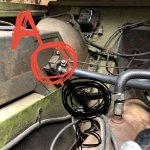
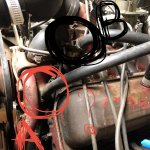
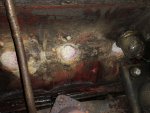
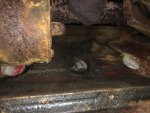
Ok, thanks again for going through this. I’m pretty sure i know what’s next now that I’ve rebuilt the carb. I attached a few photos to make sure I do what needs to be done. The 6 drain plugs don’t seem that crazy. As long as I don’t need the additional ones that look to be a pain in the ass. The other photos identify what I think to be the correct line to tap into for the filter setup.
  1. Are the 3 drain/freeze/core plugs on each side sufficient to remove? For a total of six large plugs and replacing with brass?
  2. Am I tapping into the (A) line that goes to the heater core? Or do I have this mixed up?
 

Attachments

  • F71C5640-C5D5-46C0-993D-9F49D1CB24A7.jpeg
    F71C5640-C5D5-46C0-993D-9F49D1CB24A7.jpeg
    167.3 KB · Views: 273
  • 34D8695F-011D-45AA-8030-6B52BC0A775B.jpeg
    34D8695F-011D-45AA-8030-6B52BC0A775B.jpeg
    211 KB · Views: 267
  • F3670156-C70D-4116-BD20-A3AED1FDA820.jpeg
    F3670156-C70D-4116-BD20-A3AED1FDA820.jpeg
    223.3 KB · Views: 292
  • 707FD313-FC40-4867-B2A7-86E737BFE293.jpeg
    707FD313-FC40-4867-B2A7-86E737BFE293.jpeg
    192.8 KB · Views: 271
One 1/4" plug for each side for the water jackets. Careful there's also plugs for the oil gallery. Draining the jackets pretty much empties the block.

What I did for the filter is pull the heater hose off the thermostat housing and put it on the filter outlet. Then a short hose from the housing to the filter inlet. This way when the pump pulls from the block, or when hot enough the radiator, or both; all the coolant will get filtered in a short time returning to the engine through the heater system
 
Ok, so the line from the thermostat housing is the heater core inlet then. I will find somewhere on the firewall to mount the filter. The 1/4” water jacket plug is the one in the attached photo?
 
Yes, next to the core plug.

I wouldn't mount the filter anywhere. This is only temporary. Give yourself enough hose length to stay away from the belts. Also, no pressure so keep the cap loose. As I posted, it only takes about 20min to 1/2 hour of fast idle to clean things up.
 
Back
Top